
The Basics of Business Loans
Summary

Key Takeaways
- How lenders decide: They check your revenue, business age, borrowing history, and collateral to see if you’re likely to repay on time.
- Flat vs. diminishing rate: A flat rate charges interest on the full amount you borrowed. A diminishing balance rate charges interest only on what you still owe, so your interest goes down each month.
- Fees add up: Processing, disbursement, broker, late payment, and early payment fees can make a low-rate loan more expensive than it looks.
- Interest must be in writing: Under Philippine law, a lender can’t charge interest that isn’t written in your loan contract.
- Match the term to your need: Don’t pay interest for 2 years on cash you only need for 6 months.
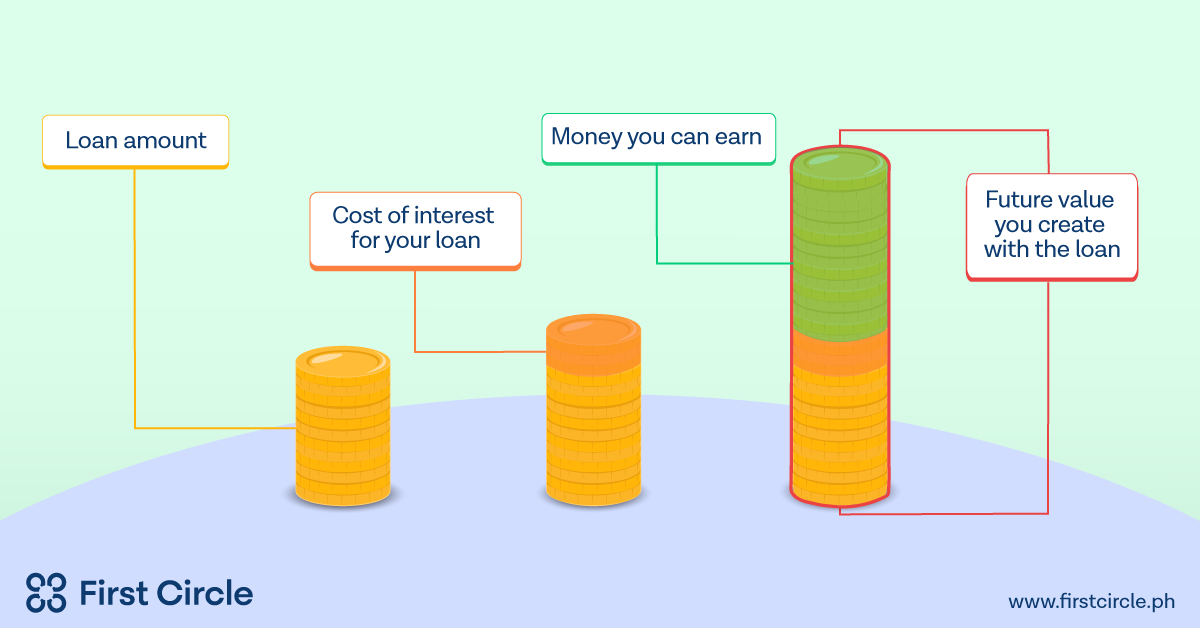
- Borrow for growth: A loan is worth it when what you earn from it is more than what it costs.
It's very common for both newbies and seasoned business owners to think that borrowing money is not a good idea, especially in the Philippines. But understanding loans and how they work can actually lessen the risk to your business and even help it grow faster!
What is a loan and how does it work?
A loan is money you borrow today, with a promise to pay it back in the future, plus interest. It’s a very simple idea, so why do loan plans and loan features always seem so complicated? It’s because the lenders are trying to do two things:
- Decide if you are a “good borrower” who is likely to pay back the loan on time
- Convince good borrowers to borrow from them instead of someone else
When deciding who to lend money to, banks and other financial institutions want to choose people who will pay them back. They can’t predict the future, but they can ask for information to help them make their decision. That is why they ask for so many requirements—they are doing research to make sure you are someone who will pay them back. For business loans, banks or lenders will usually look at your current revenue, business age, borrowing history, collateral assets, and more.
Once the bank or financial institution has decided that you’re a good borrower, their next step will be to convince you to borrow from them instead of someone else. Lenders will usually try to sell to you based on three things:
1. Interest Rate
Lower interest rates are generally better, and many lenders will highlight this. But make sure you also check the terms used when applying this rate, because they can make a big difference!
Lenders will usually give you either a monthly flat rate (also called add-on rate) or monthly diminishing balance rate. As the names suggest, a flat interest rate is computed based on the total amount you initially borrowed as long as the amount is not yet fully paid. This means you pay the same interest every month until the loan is fully paid back. A diminishing balance interest rate is applied only to the part of the loan which you have not yet repaid at that point in time, so your interest payments will lessen each month as you pay back your loan.
Philippine law requires that interest should be explicitly written on your loan contract or else no interest can be charged on your loan—so make sure to read your contracts from start to finish! You may even find some nice surprises by asking lenders for more details about the loan terms. Some lenders, like First Circle, offer interest rebates and other promos that can lower your total cost for the loan.
2. Fees
Aside from the interest rate, you should also pay close attention to the fees that come with each loan offer. These can add up quickly, especially for loans with strict penalties for changes in your repayment schedule in the future. Below are a list of common fees you may encounter when thinking about getting a business loan:
- Service or Processing Fees are the most common type of fee and it is used to cover the cost of processing your application, managing your account, providing support, and other related costs. Some lenders don’t charge a processing fee while others have extremely high processing fees. Make sure to check the actual amount included in your loan offer and consider it when you compare costs across different options.
- Disbursement Fees are like service fees but specifically applied each time you withdraw from the loan amount. Some lenders lump this cost into the processing fees, but others will charge it separately. Make sure to ask about it before choosing a financial partner because, like processing fees, the amount can vary a lot from one lender to another.
- Referral Fees or Broker Fees may be another additional cost if you apply for loans through a marketplace website or a loan broker. This fee is charged by the middleman for helping you get a loan.
- Late Payment Fees are charged when you are not able to pay on time. Most lenders will have this type of fee and it is usually 2% - 5% of the total loan amount. Make sure to check the lender’s policies for dealing with late payments so you don’t get surprised if you unexpectedly have to make a late payment.
- Early Payment Fees can also be charged by some lenders to discourage customers from paying off their loans early. Again, this can be a very big amount depending on the terms of your loan agreement so make sure to check before choosing an offer.
3. Term Length
Time is one of the most important factors when considering a loan. Most people know to look at how fast they can get cash, but the term length of the loan is just as important—you don’t want to be paying interest on a loan for 2 years when you only needed the cash boost for 6 months.
This is one of the reasons why First Circle offers business credit lines instead of fixed term loans. A credit line is like having a credit card for your business. Not only do you have a pre-approved credit limit that you can get a loan from anytime, but you can also choose how long you want to use each loan. Choose your own payment schedule, and reschedule payments if needed, so you only pay interest for as long as you actually need the money. Avail of early repayment discount options.
Loan offers might look complicated, but don’t let that scare you. Once you have a basic understanding of how loans work, it is much easier to compare your options based on the practical benefits to your business. Just don’t forget to take your relationship with the lender into account because that has some very practical implications too!
You want to find a lender that will not only give you a good price, but also continue supporting your business through its ups and downs. When the pandemic hit for example, First Circle worked with its clients to restructure their loan agreements and ease the burden of repayments rather than pressuring them to pay up despite the lockdowns. Running a business is hard enough, so you want to find a lending partner who will make things easier for you, not harder.
How do you know when it’s time to get a business loan?
Time is valuable—having what you need exactly when you need it is valuable. This is especially true in business because great opportunities are often taken by those who can act the fastest. If a customer offers you a multi-million peso project but you can’t deliver because you don’t have the cash to buy enough raw materials at that time, that will be a huge loss for your company. Not only do you have millions in lost revenue, but you are much less likely to be given similar projects in the future because the customer thinks you won’t be able to deliver.
Generally speaking, you should consider taking a business loan if it can help you take advantage of growth opportunities like the one mentioned above. Many people think that loans are for failing businesses that are running out of money, but in reality it’s the exact opposite! Remember—banks and other lenders want to give money to people and businesses who will pay them back. If you apply for a loan and get approved, chances are that the lender thinks your business is strong enough to pay back the loan and make even more money in the process.
In reality, the issue many good businesses run into is that they can’t get access to credit or a loan even if they are doing well and able to pay it back easily. This is the result of a complex web of factors, but if you find yourself in this situation then feel free to contact us and we’ll be happy to assist.
If you just need some guidance on how to evaluate your loan options, then here are some helpful questions to think about:
- How much is the real cost of the loan? Make sure to consider the interest rate, lock-in period, processing fees, collateral requirements, potential risks, and other terms.
- How much do you expect to earn from the projects where this loan will be used?
- Are your expected earnings enough to pay back the cost of the loan and more?
- If the earnings left after paying back the cost of the loan are not that much, will you get other benefits like future projects with the same client?
- Have you looked at all your available options or is there a better option you have not yet considered?
Finding the right loan product for your business can be difficult and choosing the right financing partner for your business is a big decision. You are the only one who can decide what’s best for your business, but these questions can steer you in the right direction.
Where to get a business loan?
Many business owners think that banks are the only places where they can borrow money safely, but that’s not true anymore. Here’s a list of 5 options to consider when you are looking for loan offers.
- Banks are the most traditional option for people who want to borrow money. If you have a strong existing relationship with your bank, this can be a great option for you.
Banks also offer a lot of collateral-based loans for lower rates. This generally gives you better prices but you will have to accept the risk of losing your collateral if things don’t go as planned. Banks are also known to have some of the highest loan processing and servicing fees, so make sure to consider those extra costs.
- Credit unions are cooperatives managed and controlled by the members. They usually offer financial services similar to banks, but have better rates and cheaper fees because they are non-profit organizations designed to help its members. The only con is that you need to join a credit union first and they are not very common in the Philippines yet.
- Non-bank financial institutions (NBFIs) are companies that offer financial services but are not formally classified as “banks” according to the law. NBFIs typically focus on loans and financing
NBFIs like First Circle are often faster and more flexible than banks when it comes to their products and services. They usually offer more non-collateral options, but have slightly higher prices due to less risk for the borrower. If you don’t have a lot of assets or simply don’t want to risk losing your house in case of unexpected events, this may be a good option for you.
First Circle now also offers Business Credit Plus (terms up to 24 months) and the Express Business Loan rather than the fixed-term loans often offered by banks. Having a credit line is great for businesses that have sudden unexpected needs for cash because this allows them to set up the credit ahead of time and use it whenever they need to.
- Peer-to-peer lending is when you borrow money from an individual person. There are some formal services that can help connect you to individual lenders, but there are also informal lenders who you might learn about through word-of-mouth. Lastly, there’s always the option to borrow from family and friends.
Borrowing from other individuals can be a solution if you don’t have a lot of options, but this form of lending is heavily unregulated in the Philippines and can carry higher risks than other options. If you borrow from family and friends, there may also be the additional risk to your personal relationships aside from any risks to your business.
- Government Loans for small businesses are also available through agencies such as the Department of Trade and Industry (DTI). One of the most popular programs is the DTI P3 CARES Program which offers loans to MSMEs in the Philippines.
This program offers non-collateral business loans up to Php 500,000. There are no interest rates for DTI loans through the CARES Program. However, borrowers will be charged a one-time service fee depending on the term of the loan.
Why consider getting a credit line for your business?
Loans can be a big help to your business if you know how to use them, but one of the issues you will often run into with traditional loan products is the processing time and lack of flexibility. The entire point of a loan is to get money when you need it, but traditional loan applications can take months and the terms of each offer are final once you sign—no edits allowed unless you want to pay the penalty fees.
If you really want to take advantage of the opportunities coming your way, you need to find a financing partner that moves as fast as your customers do. First Circle provides approval in as fast as 24 hours, and our Business Credit Line lets you pay only when you use it within your credit limit anytime.
Trusted by the Philippine government as an official finance partner of the Department of Trade and Industry (DTI), our mission is to enable SMEs to achieve their full potential through fast, fair and flexible financial partnership.
For questions on how to get your own Business Credit Line, you can contact our team between 8AM-6PM, Mondays to Fridays. More information is also available on the Business Credit Line product page.
Credit approval, limits, and rates granted may vary upon assessment based on existing First Circle policies.
Frequently Asked Questions
What is the difference between a flat rate and a diminishing balance rate?
A flat rate, also called an add-on rate, is computed on the full amount you originally borrowed, so your interest stays the same every month. A diminishing balance rate is computed only on the amount you haven’t paid yet, so your interest gets smaller as you repay the loan.
Can a lender charge interest that isn’t in my loan contract?
No. Philippine law requires interest to be written explicitly in your loan contract. Otherwise, no interest can be charged. Read your contract in full before signing, and ask the lender about any rebates or promos that could lower your total cost.
When should I get a business loan?
Consider a business loan when it can help you grab a growth opportunity, like a large project you can’t fund on your own right now. A loan is worth taking if the earnings it helps create are enough to cover the cost of the loan and still leave you with more.
What is the difference between a credit line and a term loan?
A term loan gives you a fixed amount upfront that you repay on a set schedule. A credit line works like a credit card for your business: you get a pre-approved limit, borrow from it when you need to, and pay interest only on what you use. First Circle’s Business Credit Line lets you pay only when you use it and choose your own payment schedule.
Where can I get a business loan in the Philippines?
You can borrow from:
- Banks, which often offer collateral-based loans at lower rates.
- Credit unions, if you’re a member.
- Non-bank financial institutions (NBFIs) such as financing companies, which usually offer more non-collateral options.
- Peer-to-peer lenders.
- Government loan programs from agencies like the Department of Trade and Industry (DTI).
Information in this list is sourced from publicly available information as of October 2026 and is provided for general reference only. Rates, terms, and eligibility criteria are subject to change without notice. This should not be relied upon as a definitive comparison. Contact each lender directly for current offers.
Loan product information, interest rates, and eligibility criteria for First Circle as of date of publication are subject to change at any time without notice. First Circle Growth Finance Corp. is a financing company with SEC Registration No. CS201605477 and CA No. 1108. It is regulated by the Securities and Exchange Commission with the email flcd_queries@sec.gov.ph. For any questions, you may reach out to support@firstcircle.com.

Jess Jacutan
Get started with First Circle today
Apply for an account online in 5 minutes
Simply submit 3-7 documents to us
No paperwork, no branch visits — 100% online