

3 Stability Strategies to Boost Business Resilience Amid Trade Uncertainty
Summary

Key Takeaways
- Rather than growth at all costs, business resilience is a smarter benchmark for SMEs in uncertain markets
- A pre-approved business credit line gives SMEs access to capital when they need it, without the delay of applying during a crisis.
- First Circle's Business Credit Line offers up to ₱25 million in credit with no collateral required, no setup fees, and monthly interest as low as 0.79%.
- Revenue diversification through new products, segments, and sales channels create multiple income streams, so no single disruption shuts the business down.
- A cash reserve covering 1–3 months of fixed costs is one of the most effective buffers against economic shocks.
- MSMEs make up 99.5% of Philippine enterprises, meaning macroeconomic disruptions hit the vast majority of the country's businesses.
When global trade conditions shift — whether from new tariffs, supply chain realignments, trade policy changes, or currency volatility — Philippine small, and medium enterprises (SMEs) typically absorb the impact before large corporations do. Large businesses have diversified revenue, established credit facilities, and dedicated risk management teams. Most SMEs don't.
So why are Philippine SMEs so vulnerable to global trade shocks, even if the events that cause them — for instance, a fuel crisis in the Middle East, or a change in trading policy in the US — are all happening far away? And how can SMEs prepare for future trade disruptions? Let's find out.
Why Does Economic Uncertainty Hit SMEs Harder Than Large Corporations?
SMEs lack the diversified revenue, pre-established sources of capital, and financial buffers that large corporations can depend on to absorb shocks. Thus, any disruption hits their cash flow and operations immediately, with little room to recover.
For Philippine businesses, the immediate issues that affect them during a global trade shock includes:
- Higher input costs when supplier prices rise due to global market shifts
- Supplier disruptions when international partners slow down or change payment terms
- Weaker consumer demand when uncertainty causes buyers to pull back spending
When all of these risks hit at once, SMEs with limited financial buffers struggle to recover. Supplier invoices pile up, revenue drops, and without accessible capital, a cash flow gap can quickly become a crisis.
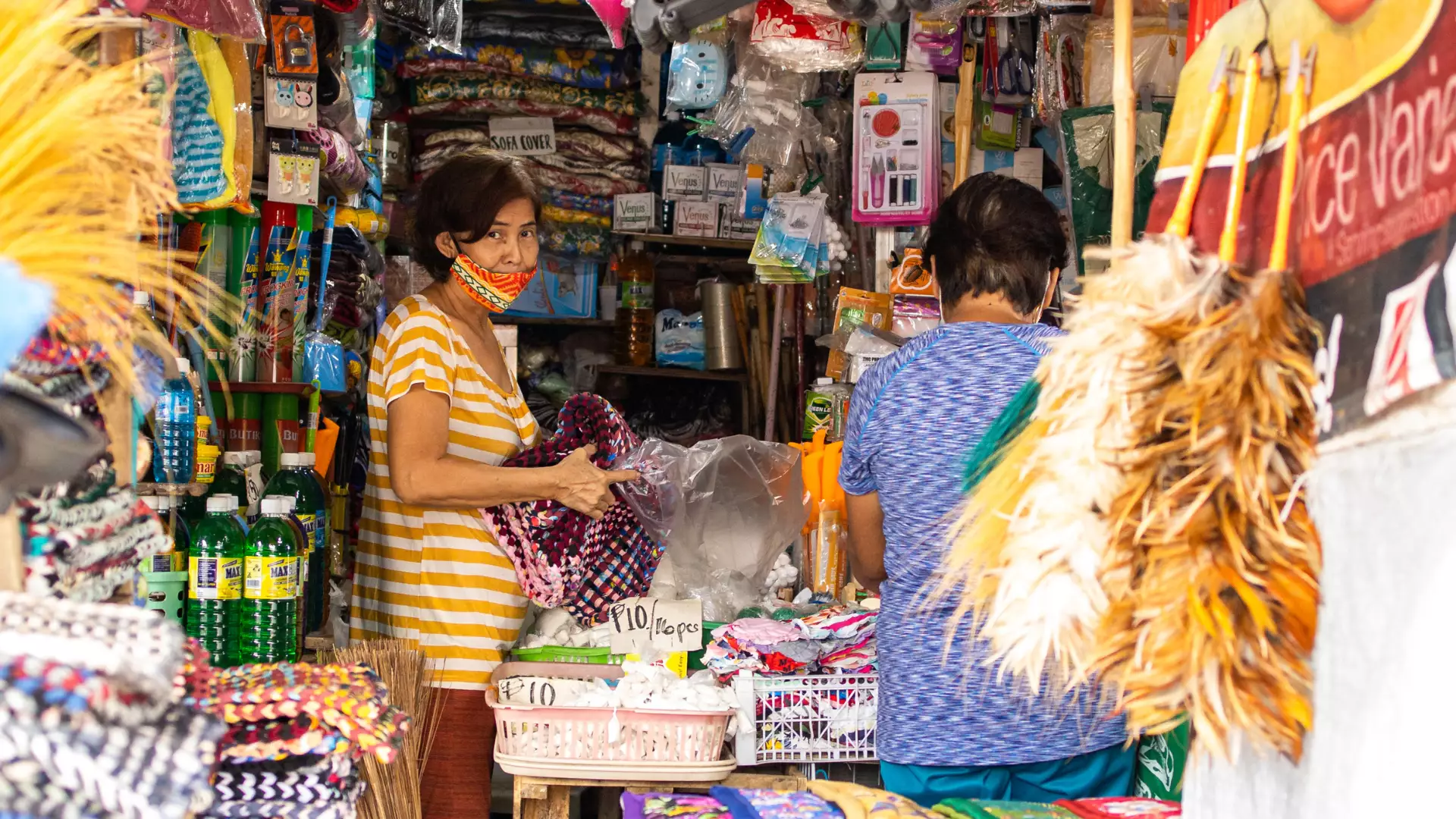
Why is business resilience just as important as business growth?
For decades, we've measured business success through expansion: more sales, more locations, more market share. But after the 2020 pandemic and the global trade upheavals that followed, business resilience — the ability to absorb shocks and keep operating — is emerging as a more meaningful long-term metric.
We've seen this shift in thinking over time with our clients at First Circle, where we provide business financing to Philippine SMEs. Many have begun prioritizing organizational resilience over pure growth. Rather than chasing aggressive revenue targets, resilient SMEs focus on:
- Meeting payroll and supplier obligations consistently
- Keeping operations lean and overhead manageable
- Maintaining financial headroom to absorb shocks
Resilient SMEs shift their goal from "how fast can we grow?" to "how long can we sustain the business — and what happens if something goes wrong?"
3 Business Stability Strategies SMEs Can Apply Now
Strategy 1. Securing Flexible Credit
Traditional business loans seem fairly straightforward: apply for a fixed lump sum, wait for approval, repay over months and years. But when a disruption hits, every business in your situation is applying for a loan at the same time — and traditional lenders aren't built for that urgency. Processing takes days or weeks. Meanwhile, your payroll and supplier invoices are due today.
A business credit line works differently. It gives your business pre-approved access to capital that you can tap as needed. A good credit line will also let you withdraw funds in just 1-2 days, and wouldn't charge you any fees for maintenance when unused. It's a great "emergency fund" to have in place before any business disruptions can happen.
First Circle's Business Credit Line provides Philippine SMEs with up to ₱25 million in pre-approved credit, with no collateral, application, or maintenance fees required. Monthly interest starts from 0.79%, and funds can be drawn down in as fast as 1–2 business days. You only pay for what you use.
Strategy 2. Diversifying Revenue Streams
Relying on a single product, customer segment, or sales channel is a structural vulnerability — just one disruption to that single revenue stream and your business will scramble to mitigate the impact. This is why revenue diversification is important. It creates multiple income streams so that even if one part of the business slows down, others continue generating cash flow.
SMEs can diversify by:
- Launching complementary product lines that serve the same existing customer base (lowest risk, lowest investment)
- Targeting alternative customer segments who have a need for what you already offer
- Expanding into online or cross-border markets to reduce geographic concentration
Even modest diversification matters. A second revenue stream that accounts for 20–30% of total income significantly reduces a business's exposure to any single disruption.

Strategy 3. Building Emergency Cash Reserves
An emergency cash reserve is one of the simplest and most effective resilience strategies — and one of the most under-used among businesses operating on tight margins.
The goal isn't to set aside large lump sums. It's to build the habit of consistently reserving a small percentage of monthly revenue — typically 5–10% — until a meaningful buffer exists. That buffer can cover:
- Payroll during a slow month without resorting to high-interest borrowing
- Rent and fixed overheads when revenue dips unexpectedly
- Inventory when supplier terms change or cost spikes occur
A cash reserve covering 1–3 months of fixed operating costs is a widely cited target for SMEs. It's the difference between a temporary disruption and a permanent closure.
Tip: Keep your reserves in a fee-free account with no maintaining balance and instant transfer access — so the funds are truly available when you need them. Consider First Circle's Bank Account*, which offers unlimited free transfers, zero maintaining balance, and online account setup.
*First Circle is a financing company regulated by the Securities and Exchange Commission. It does not engage in banking services and it is not regulated by the Bangko Sentral ng Pilipinas. Services will be provided by Netbank (A Rural Bank), Inc. and Farmbank Inc. (A Rural Bank) which are banks regulated by the Bangko Sentral ng Pilipinas.
While these adjustments may require short-term sacrifices, they are necessary steps toward long-term survival. Adaptability is no longer just an advantage — it's a core strategy for organizational resilience.
As the world changes, so too must our definition of success. For SMEs, it may be time to look beyond growth - and start building businesses that are truly built to last.
Frequently Asked Questions
How much should an SME keep in emergency cash reserves?
Most financial guidance for SMEs recommends maintaining a cash reserve that covers 1–3 months of fixed operating costs — including payroll, rent, and core supplier obligations. Building this reserve doesn't require large upfront savings. Setting aside 5–10% of monthly revenue consistently can create a meaningful buffer over 6–12 months.
What financing options does First Circle offer for Philippine SMEs?
First Circle offers three main credit products for Philippine SMEs:
Business Credit Line is a credit line with monthly interest rates starting at 0.79%. It offers credit limits starting from ₱100,000 to ₱25 million and repayment terms up to 12 months. It is designed for businesses looking for a flexible, always-ready source of funds that you can draw from and repay as needed.
Business Credit Plus is a fixed-term loan of ₱1 million to ₱25 million. It is designed for larger, one-time investments. You receive the full amount upfront and repay it over a period of up to 2 years. Monthly interest rates start at 1.49%.
Express Business Loan is for businesses that need urgent financing. It provides up to ₱25 million with same-day approval, and can be disbursed in as fast as 24 hours. Repay within 1 month for an early repayment fee discount of 0.5% rebate, or reschedule your repayment with a 3% fee. Instead of an interest rate, you pay a one-time processing fee of 1-4% depending on your loan amount.
All products require no collateral and can be applied for online in just 5 minutes. Get started here.
First Circle Growth Finance Corp. is a financing company with SEC Registration No. CS201605477 and CA No. 1108. It is regulated by the Securities and Exchange Commission with the email flcd_queries@sec.gov.ph. For any questions, you may reach out to support@firstcircle.com.

Jess Jacutan
Get started with First Circle today
Apply for an account online in 5 minutes
Simply submit 3-7 documents to us
No paperwork, no branch visits — 100% online