
2024 Bank Financing Stats: Banks Miss MSME Lending Quota, Despite MSMEs Employing 65% of PH Workforce
Philippine banks have once again failed to lend 10% of their loan portfolio to micro, small and medium-sized enterprises (MSME), as required by law.
According to Bangko Sentral ng Pilipinas (BSP), banks only lent 4.52% or P488.13 billion of their P10.8-trillion loan portfolio to MSMEs as of June 2024. Further data shows that banks have fallen short of the mandatory credit allocation for MSMEs since 2011.
Small and medium enterprises (SMEs) are the backbone of the Philippine economy, representing nearly all registered businesses and generating employment for a majority of the nation’s workforce. However, many SMEs continue to face difficulties accessing bank financing, despite numerous financial inclusion efforts by the government and the private sector.
MSMEs are responsible for 65.1% of total employment across the Philippines
According to the Philippine Statistics Authority (PSA)’s 2022 data, micro, small, and medium enterprises (MSMEs) make up a staggering 99.6% of all registered businesses in the Philippines – highlighting their integral role in the country’s economic landscape. MSMEs are also responsible for 65.1% of total employment across the nation.
MSME Breakdown by Enterprise Size
- Micro enterprises: Over 1 million establishments, employing around 2.82 million people.
- Small enterprises: Approximately 96,464 establishments with 2.18 million employees.
- Medium enterprises: 4,484 establishments providing employment for around 610,000 people.
The concentration of employment within MSMEs signifies their potential impact on economic growth – making it even more important for the Philippine government to address their bank financing and financial inclusion challenges.

Banks only lent 4.52% of their total loan portfolio to MSMEs in 2024
Under Republic Act No. 6977 or the Magna Carta for MSMEs, banks are required to allocate 10% of their total loan portfolio for small businesses to boost the sector — 8% for micro and small enterprises and 2% for medium-sized enterprises. However, many banks would rather pay the fines for noncompliance instead of assuming the risks that come with providing business loans to MSMEs.
This is evidenced by BSP’s 2024 findings on bank financing. As of June 2024, big banks only allocated a mere 4.52% (₱488.13 billion) of their ₱10.8-trillion loan portfolio to MSMEs. Micro and small enterprises accounted for 1.82% of this allocation, while medium-sized enterprises received 2.7%. This diminishing access to financing indicates a lag in MSME loan growth compared to that of large corporations, presenting a major obstacle to their expansion and resilience.
In turn, universal and commercial banks lent 1.35% of their total loan book (₱134.1 billion) to micro and small businesses, and 2.38% (₱235.8 billion) to medium enterprises. Thrift banks allocated 3.74% of their loan book to micro and small businesses, and 5.39% to medium-sized businesses. Digital banks lent 1.41% (₱250 million) to micro and small businesses, and 0.16% (₱30 million) to medium enterprises.
In contrast, rural and cooperative banks have performed better in providing MSMEs bank financing. According to BSP, rural banks loaned 17.61% (₱37.9 billion) of their total credit to micro and small enterprises, and 9.26% (₱19.9 billion) to medium businesses – far exceeding the required threshold for MSME business loans.
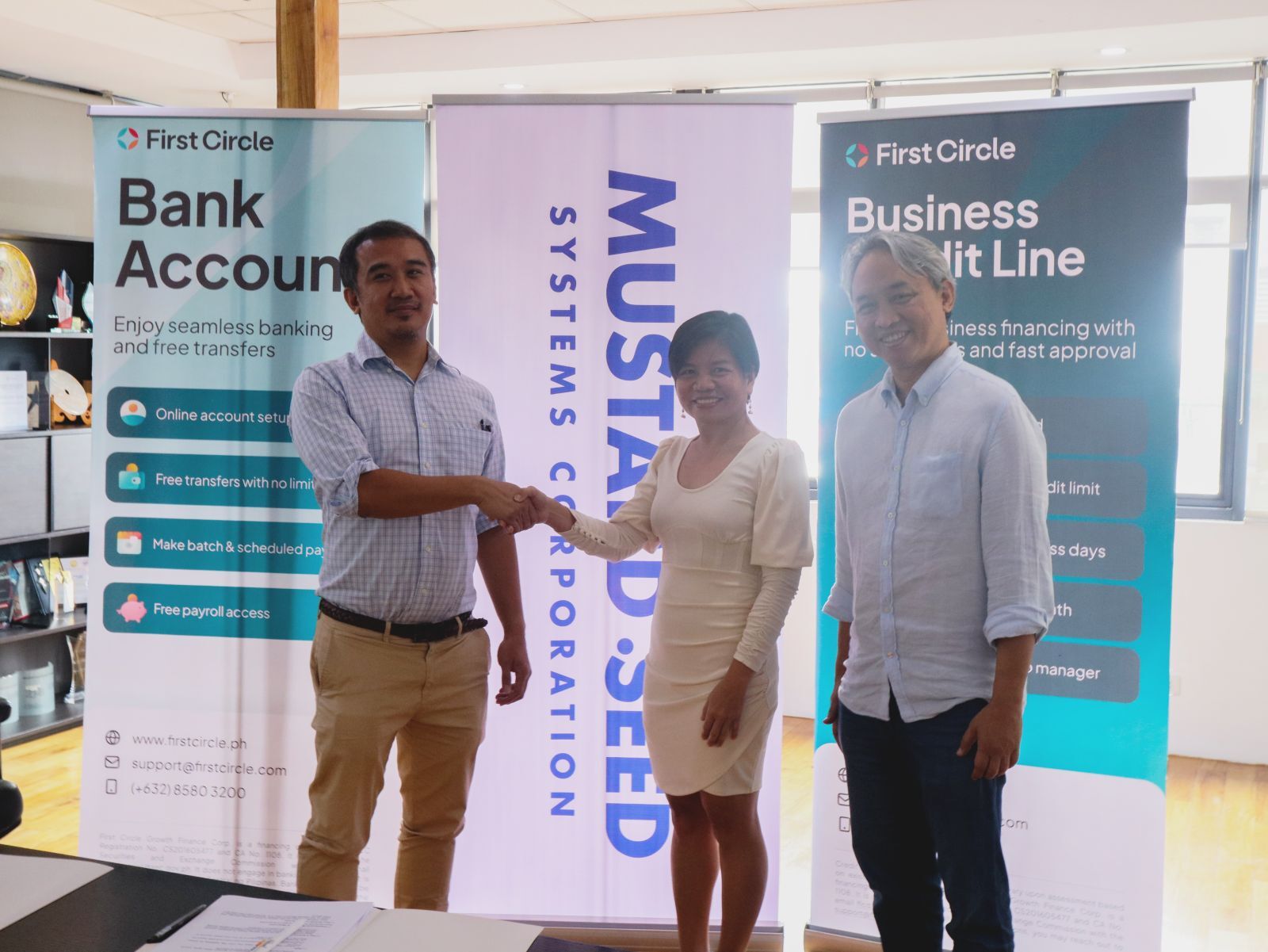
MSMEs face obstacles in bank financing due to high interest rates, lack of collateral assets, fewer financial documentation proving their creditworthiness, and a general lack of tailored financial solutions to accommodate these difficulties. To fill the gap, the government has partnered with private fintech institutions such as Paymongo and First Circle. The latter offers specialized credit lines to SMEs for as low as 0.99% interest, lowering the barriers to financing by requesting fewer documentary requirements from MSMEs, as well as removing application and processing fees.
Agricultural workers and women-owned MSMEs remain excluded from bank financing and financial inclusion tools
According to BSP’s 2021 Financial Inclusion Survey, seven out of ten farmers and agricultural workers remain financially excluded. This exclusion is also pronounced for female business owners, with 58% of women-owned MSMEs citing access to finance as a challenge compared to 37% of male-owned MSMEs. These statistics underscore the barriers certain segments of MSMEs encounter, hindering their ability to secure the funding necessary for business development.
A notable gap also persists in the adoption of digital finance across different types of MSMEs. According to the 2022 ADB MSME survey, 44% of male-owned MSMEs use digital financial services, while only 28% of female-owned MSMEs do the same. In terms of enterprise size, 19% of micro, 54% of small, and 73% of medium enterprises reported using digital finance.
The same ADB 2022 survey mentions that only 12% of male-owned and 9% of female-owned MSMEs cited access to training and information as adequate. This issue is more pronounced among smaller enterprises, with only 6% of micro businesses reporting sufficient access compared to 25% of medium enterprises.

Financial Health Goals of the National Strategy for Financial Inclusion (NSFI)
The National Strategy for Financial Inclusion (NSFI) for 2022-2028 is a set of objectives and recommendations devised by BSP to promote financial health and financial inclusion for MSMEs. The NSFI’s initiatives focus on broadening financial literacy, increasing access to various financial services, and enabling SMEs to build a strong financial foundation. This comprehensive approach aims to create a more inclusive financial ecosystem where MSMEs can thrive and more readily access bank financing.
As of 2024, key objectives include:
- Strengthening Credit Infrastructure: Initiatives such as the credit risk database will improve risk assessment for MSME clients, while the credit surety fund is a credit guarantee program that enables MSMEs easier access to non-collateral bank financing by helping MSMEs become creditworthy and bankable.
- Promoting Innovative Financing: Through movable asset finance, the BSP encourages alternative financing solutions that help MSMEs secure credit using non-traditional collateral, such as livestock, machinery, receivables, and other movable assets.
- Digitally Enabling MSMEs: Initiatives like the Standard Business Loan Application Form and PalengQR Plus Program aim to streamline application processes and facilitate digital transactions for more MSMEs.
Financial education also plays a critical role in empowering MSMEs to manage their finances and utilize available resources effectively. DTI Negosyo Centers across the Philippines provide financial literacy sessions and strategies to improve practical skills and financial inclusion among entrepreneurs. This support helps business owners understand credit, manage cash flow, and make sound financial decisions that could impact their eligibility for bank financing.
BSP also has a Financial Consumer Protection Framework that ensures MSMEs and other consumers have access to secure and reliable digital financial services. BSP offers consumer assistance channels and chatbots for instant online support, helping MSMEs resolve issues and maintain confidence in using digital finance tools.
The latest data from the Bangko Sentral ng Pilipinas highlights both the progress and challenges within the realm of financial inclusion for Philippine SMEs. While digital finance adoption is on the rise, access to bank financing remains a critical issue that hinders MSMEs' innovation, resilience, and growth. Addressing these financing challenges through a more centralized credit database, movable asset finance, financial education, and other innovations designed to simplify financing access for MSMEs should be a key focus for both the government and the private sector moving forward.
Get started with First Circle today
Apply for an account online in 5 minutes
Simply submit 3-7 documents to us
No paperwork, no branch visits — 100% online